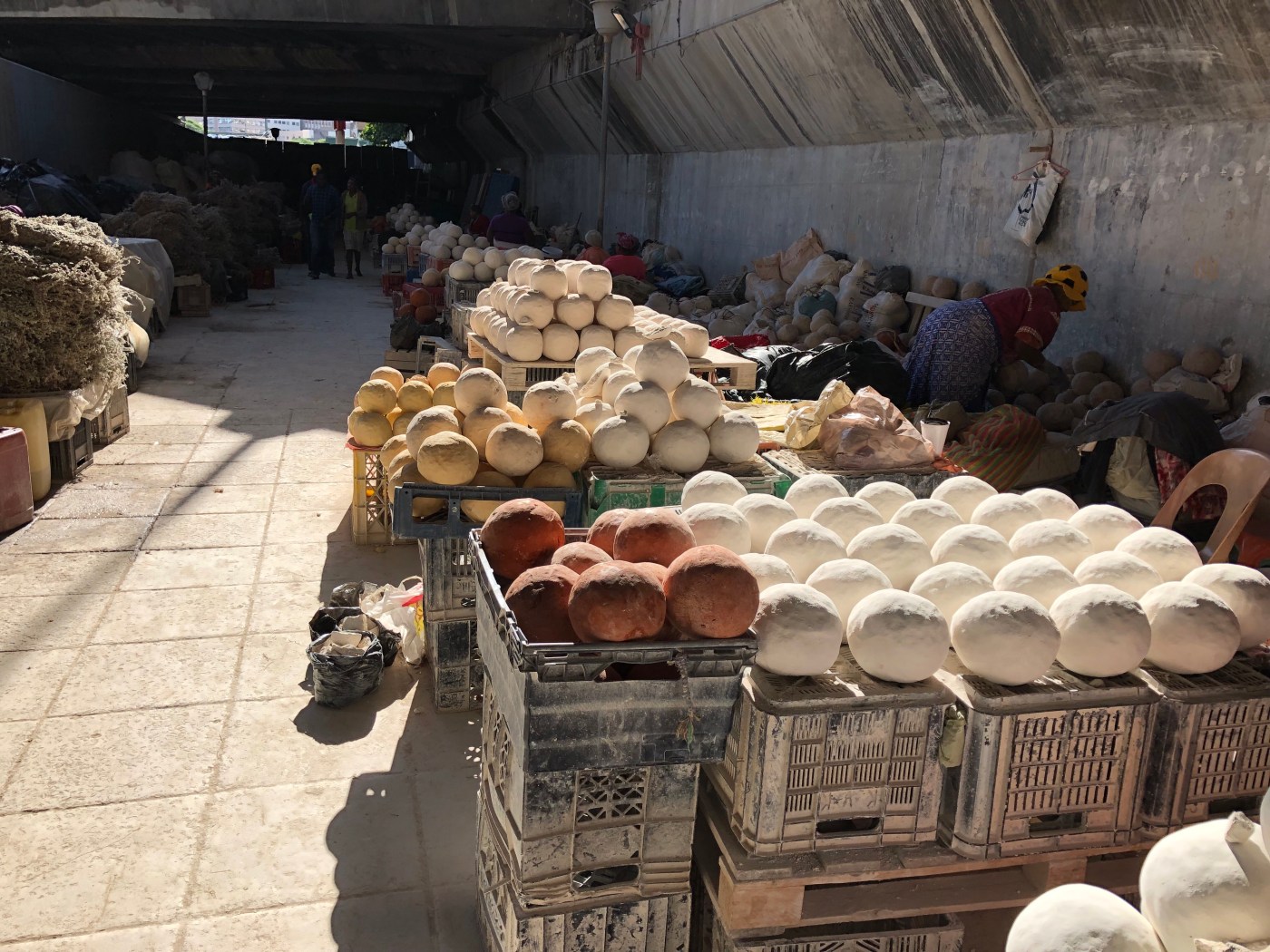
Earlier in the year I started a new job in a company that has significant trade from the informal business sector within South Africa. I have been fortunate to have spent a lot of time in the informal trade and rural areas of South Africa throughout my career. One of the key insights within Durban where I live was the importance of transport nodes and transport hubs as venues for influencing consumer behaviour. One thing about me is that I love getting out of the office, seeing new areas and meeting new people so I jumped into my car and took a trip downtown to Durban’s Warwick triangle area. Over 450 thousand people pass through this area every day and it combines rail and road transport.
If you start at Warwick triangle you can go anywhere within the city and to most places within the province. Due to apartheid spatial planning, many blue collar workers are forced to use public transport just to get to and from their homes and places or work. There is also the phenomenon of people working in the city mid-week, but migrating out of town to the more rural areas over the weekend. Typically migrant South African workers have worked in the city, but left their families in their rural areas of origin.
In order to get the full experience I arranged in advance for a guide to meet me there and take me around. I am a glad I did because on my own I wouldn’t have known to venture into some of the areas he took me to. Below are some of the my learnings and observations from a very interesting day.
1.You probably wont die –
Those of us who live in suburban areas in a middle or upper class bubble are typically afraid of venturing into poorer areas. Crime is usually the reason because as inner cities decay, criminals move in. Lets be honest, this was even the case in New York and people like Rudy Giuliani built reputations on cleaning up the mess. Not sure why our African cities would be expected to be any different? While you have to be alert, streetwise and avoid taking unnecessary risks, I do believe that these areas are safer than we believe them to be. The local community realise that reducing crime is key to their livelihood and dont like crime either. People are inherently good. We forget that too easily. While in the Warwick area, I was pleased to see a number of tourists and some girls from a local private school who were visiting the market for the day. At Warwick junction the community has even appointed security agents of its own who patrol and work with the police to identify criminals.
2. Language is important –
I’m not a born isiZulu speaker but can get by with my limited conversational ability. People appreciate being addressed in their own language and even if not fluent just the attempt is important. It immediately breaks down barriers and people engage more openly. I remember working in areas that were dominated by foreign traders from Somalia, Ethiopia, India and Pakistan. While their native languages varied everyone accepted and understood the intention of a friendly “a salaam alaikum”. They would respond to questions in their limited English, but appreciated that we were trying. It is glamorous to learn European languages such as French and Spanish these days, but knowledge of a local language is more valuable in a local market.
3. People dont need anyone to organise them
I met one lady whose family had been selling vegetables at the fresh produce market for 4 generations. She wakes up at 3am every morning to head to the market so she can send runners to secure her produce for the day from the agricultural agents. This lady has managed to educate 4 children to university level and her eldest son is an electrical engineer. She demonstrates in her daily activities more business skills than the average university educated graduate sitting in an air conditioned office. She can manage supply, demand, customer relations, supply relationships, logistics, finance and security on her own. And her work ethic is stuff of legend.
What most impressed me is that the traders at the market organised themselves to sue the local Municipality when it threatened to close the market. And they won! I have already mentioned the security system initiated and implemented entirely by the traders on their own as a second example. At each section of the market there is a leader who co-ordinates the traders activities. It is the responsibility of the leader to make sure that any new market stall will not be detrimental to the well-being of the existing traders. There is no price collusion as prices are fiercely negotiated every minute, however, it is a way of guaranteeing that each stall holder has some level of sustainable income.
These traders dont need anyone to save them. Left alone they can navigate the economy and its challenges and generate income for generations.
4. Nobody understands the market better than someone from the market
The product array in this areas varies significantly. From the local traditional medicine or muti market, to traditional clothing, food, snacks, groceries, meat, fresh produce, spices and curios. I didn’t understand why there were 4 stalls next to each other all selling church clothes. The corporate training in me would have wanted to lecture them on differentiation in order to maximise profits. But I would have been very wrong to do this. The traders would not be selling it if it did not sell and the market can absorb 4 church uniform stalls and still provide the owners with a profit. The people manning the stalls may not be educated, but they know their market better than you do. Don’t try and talk down to them and make them feel bad for your own intellectual benefit. Rather get the insights (who is buying, why are they buying, what mindset are they in when they buy, who makes the clothes etc)
5. Mastering the opportunity cost
The consumers in the area are on very low limited incomes. In our province almost 40% of the population survive due to the government’s social grant welfare system. It was interesting to see how people walking through the market weigh up purchase decisions. Firstly they are in transit and the time to transact is precious. Missing a train could entail an hour wait to the next one as an example. So each purchase decision has to be made quickly. The stall owners have mastered this concept and I was amazed to see how curtains had been added to stalls to convert them into impromptu changing rooms for clothes. Or how food was packaged in grab and go formats.
Second, each unit of expenditure is compared against something else. Once they know the price they quickly trade off what they will have to forego in their option set in order to maximise the utility of the purchase. I saw how a purchase of pack of cigarettes and a Coke became a purchase of a single cigarette, a Coke and some food instead within seconds. All for the same cost. I dont believe that wealthier consumers make this trade off very well . What am I forgoing by having a drink out with the boys? Family time? A date night? Or some money into a savings plan? I will be right back, my drink is here!
So where does this leave us? I found the Warwick market to be one of the most vibrant and energetic spaces I have been in. It took me out of my comfort zone, but it made me think about the many lessons in the human interactions happening there on a daily basis.
 300Paychecks
Leave a comment